
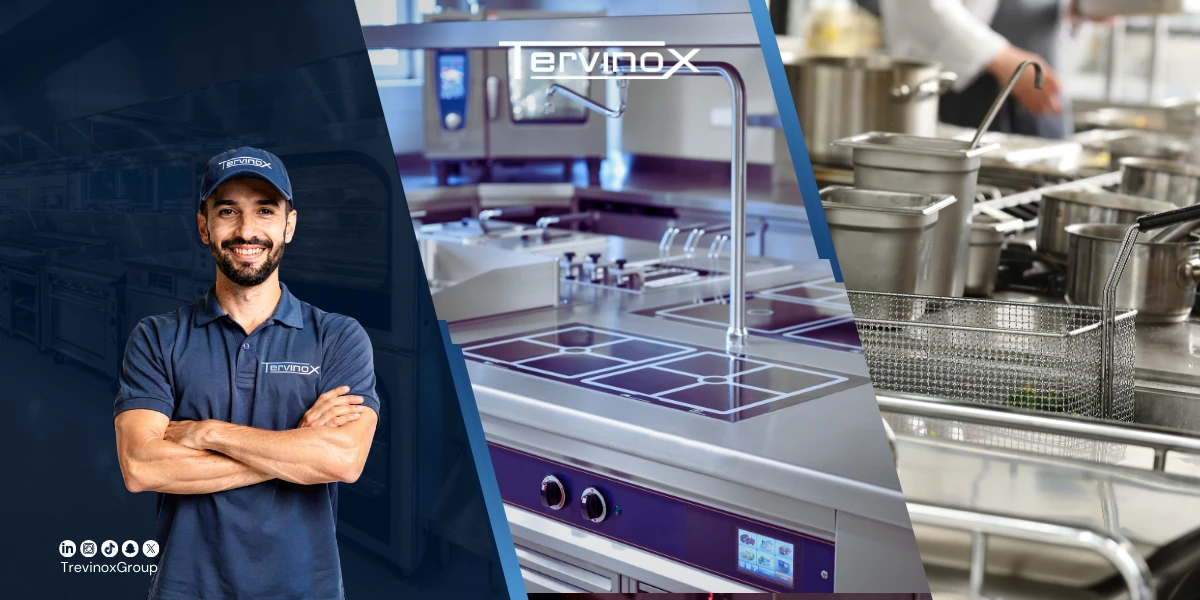
Managing a successful restaurant means paying attention to every financial detail, and electricity and gas bills are often the black hole that swallows a significant portion of monthly profits. This isn't just about turning off lights or reducing operating hours, it primarily depends on the quality of equipment used and intelligently designing the workflow to minimize thermal waste. When you seriously look for ways to improve energy efficiency in commercial kitchens, you'll find that the solution lies in investing in high-quality stainless steel equipment and proper thermal insulation that saves effort and money. At Tervinox, we understand these challenges and manufacture equipment that lasts long and operates efficiently.
Want to reduce operating costs with professionally designed equipment? Contact us today at Tervinox and let us equip your kitchen for success.
Improving Energy Efficiency in Commercial Kitchens
Talking about improving energy efficiency in commercial kitchens is no longer a luxury or just an environmental slogan, it's an absolute necessity for budget control and increasing profit margins.
A successful commercial kitchen relies on an integrated system that starts with manufacturing quality and ends with staff behavior. When you use equipment manufactured from high-quality stainless steel as we offer at Tervinox, you ensure optimal heat distribution and reduced loss, meaning ovens and refrigerators won't have to work at maximum capacity all the time to maintain required temperatures.
Investing in the right infrastructure is the first step to tangibly reducing monthly operating bills.
Energy Consumption Audit and Identifying Waste Points
Before you start purchasing any new equipment, you first need to know where your money is going. The energy audit process reveals the hidden "holes" in your kitchen, whether they're leaks in thermal insulation or equipment operating at low efficiency.
Our goal here is to turn data into decisions, not just collect numbers. When reviewing your kitchen, focus on the following points that are often overlooked:
- Check door gaskets: Ensure refrigerator and oven doors close tightly, as simple leakage forces the compressor to work extra hours
- Maintain ventilation systems: Grease buildup in hoods and fans obstructs airflow, increasing air conditioning load and exhaust fan consumption
- Calibrate thermostats: Ensure actual temperatures match indicators, as a small difference may mean wasting gas or electricity unnecessarily
- Insulate hot water pipes: Heat loss during water transfer from heater to tap is blatant energy waste that can be solved with simple insulation
Learn more: Stainless Steel Equipment Selection Guide
Replacing Old Equipment with Energy-Efficient Alternatives
Keeping worn-out equipment under the guise of saving is actually draining your resources. Old equipment consumes energy that can reach double what modern models designed with high-efficiency standards consume.
When considering upgrades, you should look at the equipment's lifespan and total Life Cycle Cost, not just the initial purchase price. The following table shows you the expected difference when upgrading:
Equipment Type | Problem with Old Models | Benefit of Upgrading to Modern Equipment |
|---|---|---|
Oil Fryers | Rely on continuous heating with high thermal loss | Heat sensing technologies and burner operation only when needed |
Dishwashers | Consume huge amounts of water with uninsulated heating | Water recycling systems and thermal insulation that preserves rinse heat |
Gas Ovens | Pilot burners operating 24 hours | Electronic ignition system and advanced thermal insulation |
Cooling Units | Fixed-speed motors consuming maximum power constantly | Variable-speed inverter compressors saving up to 30% electricity |
Scheduling Equipment Use During Peak Hours
Many restaurants face penalties or high fees due to exceeding electrical loads during peak hours. The smart solution lies in precisely organizing the operation process so that all high-consumption devices don't operate simultaneously. This organization requires awareness from the kitchen manager and staff to reduce peak demand on energy.
Smart operation strategy:
- Sequential operation: Don't turn on all ovens, fryers, and dishwashers the moment the restaurant opens in the morning; start only with equipment that needs time to heat up
- Prepare early: Complete energy-intensive cooking operations (such as boiling or bulk baking) before electrical peak hours (usually noon)
- Turn off unused equipment: The toaster or grill doesn't need to stay on throughout the quiet period between meals, adopt an on-demand operation policy as much as possible
Heat Recovery and Utilization Systems
One of the smartest solutions in modern kitchens is not letting energy go to waste. Commercial kitchens produce enormous amounts of wasted heat through oven exhausts, refrigerator condensers, and hot wastewater.
Heat recovery technologies capture this energy and redirect it to heat water used in cleaning or cooking, significantly reducing reliance on traditional heaters.
For example, a heat exchanger unit can be installed on the dishwasher drain line to warm incoming cold water, raising its temperature for free before entering the heater. This means direct savings in gas or electricity and reduced thermal load inside the kitchen itself.
Learn more: Reducing Food Waste in Bakeries and Restaurants
Monitoring and Measuring Improvements Periodically
You can't manage what you can't measure. Installing energy consumption monitoring systems gives you clear visibility into the success of your savings plans.
It doesn't stop at installing efficient equipment, you must continuously monitor their performance and employee behavior toward them. Periodic monitoring ensures efficiency continuity and reveals any sudden equipment malfunction before it turns into an expensive bill.
- Use smart sub-meters for specific areas in the kitchen (such as cooling or cooking areas) to identify the highest consumers
- Compare current energy bills with previous bills from the same period last year after neutralizing price differences
- Hold monthly meetings with staff to review operating practices and reward those committed to savings standards
- Regularly update preventive maintenance records to link equipment performance with energy consumption
Final Thoughts
Ultimately, achieving high energy efficiency in your kitchen isn't a complicated or impossible process, it's a conscious management decision that starts with choosing the right equipment partner. Every watt of electricity you save and every cubic meter of gas you conserve goes directly into your net profits and enhances your business sustainability. At Tervinox, we believe that precisely designed equipment is the cornerstone of any economical and successful kitchen.
Don't hesitate to invest in stainless steel equipment that lasts long and operates efficiently, because the real cost isn't what you pay today, but what you save every day. Start your improvement journey now, and let your kitchen work for you, not against you.
Frequently Asked Questions
Does kitchen lighting actually affect the electricity bill or is it negligible?
Yes, it does affect it. Replacing traditional bulbs with heat and moisture-resistant LED lamps saves about 75% of lighting energy and reduces emitted heat, lightening the load on air conditioning.
What is the importance of spray valves in the washing area?
These valves work with high efficiency to clean dishes before putting them in the washer using less water and higher pressure, saving hundreds of gallons of hot water annually.
Does the design of the flow line in the kitchen affect energy?
Absolutely. Poor design makes distances longer and increases the time refrigerators and equipment remain open, while the streamlined design we provide reduces movement and time, thus reducing waste.
How do I deal with ice buildup in walk-in freezers?
Ice buildup means there's warm air leakage or a defect in the defrost cycle, making the unit work at double capacity. Seals and the defrost system must be maintained immediately.
Is induction cooking better than gas for savings?
Yes, induction devices provide heat transfer efficiency reaching 90% compared to 40-50% for gas, and they don't heat the surrounding air, saving on air conditioning and ventilation costs.



