
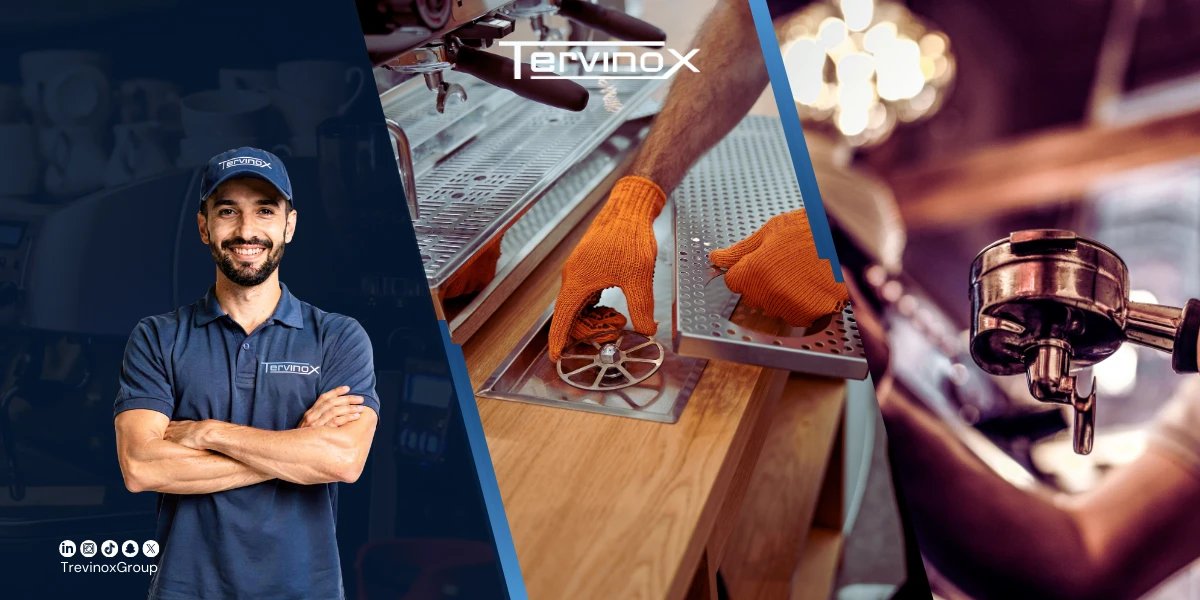
Few things threaten a commercial project more than an unexpected breakdown during peak hours. Just one minute of downtime in the hospitality world can mean losing customers, reputation, and revenue. For this reason, regularly servicing café and restaurant equipment is a smart investment that ensures continuity and is not simply another line in the expense sheet. At Tervinox, we know exactly how stressful commercial kitchens can get, and we offer practical solutions that protect your investment and extend the lifespan of your equipment, so you can focus on serving guests instead of worrying about breakdowns.
Do not let unexpected breakdowns stop your profits. Contact us now and get a full inspection of your project’s equipment. Request our services through the Tervinox app.
What Is the Difference Between Periodic and Emergency Maintenance?
When managing your restaurant’s assets, it is crucial to clearly distinguish between two types of technical interventions, as confusing them can result in unplanned, heavy expenses. Periodic (preventive) maintenance is a proactive, pre‑scheduled process, focused on inspecting equipment while it is still operating smoothly, detecting worn or upcoming issues before they cause damage, and ensuring uninterrupted operation. In contrast, emergency (corrective) maintenance is a delayed reaction that happens after the device has already stopped working, usually at the busiest time, forcing you to pay much higher repair fees and losing sales. The table below shows the key differences so you can choose the right strategy.
Aspect of comparison | Periodic (preventive) maintenance | Emergency (corrective) maintenance |
|---|---|---|
Timing | Scheduled during quiet hours | Unexpected, often at peak times |
Cost | Low and fixed within the budget | Very high (emergency fees + urgent parts) |
Equipment life | Extends the average lifespan | Shortens it due to prior neglect |
Operational impact | No production stoppage | Full stoppage and customer loss |
How Often Should Preventive Maintenance Be Done?
There is no one‑size‑fits‑all answer. The maintenance schedule for café and restaurant equipment depends entirely on operational scale and daily equipment usage. Machines that work under high pressure and temperature, such as fryers and grills, require more frequent checks than cold‑preparation tools. The golden rule is to follow the manufacturer’s recommendations, but real‑world experience calls for realistic planning so the kitchen does not shut down. Ignoring service intervals allows grease and oil buildup inside components, which can lead to complex breakdowns and, God forbid, fire risks.
Preventive‑service intervals can generally be divided by usage as follows:
- Monthly inspection: thermostat calibration for ovens, checking blender and mixer blades, and verifying gas line safety.
- Quarterly inspection: cleaning fridge condensers, deep cleaning hood filters, and reviewing conveyor belts in dishwashers.
- Biannual inspection: comprehensive motor servicing, testing automatic fire suppression systems, and replacing consumables such as seals and handles.
- Annual inspection: full energy‑efficiency review of all equipment and assessment of whether replacement or full refurbishment is needed.
Which Café Equipment Requires Monthly Maintenance?
In the café world, drink quality is roughly 50% barista skill and 50% equipment cleanliness and performance. Monthly maintenance is not a luxury. It is essential to keep your product tasting consistent. Certain coffee‑shop machines are highly sensitive to mineral scale and coffee‑oil residues, and if these are not serviced monthly, you will notice weaker steam pressure and off‑flavor coffee. Focused, regular maintenance avoids sudden blockages that can halt your entire production line.
Key devices that demand close attention and monthly servicing in a café include:
- Water‑filter systems: inspect and replace cartridges as needed, since water is the main ingredient in coffee and directly affects machine life.
- Coffee grinders: disassemble gears, remove stale coffee oil, and recalibrate grind settings for ideal extraction.
- Ice machines: clean water circuits and disinfect the inner bin to prevent bacteria and mold growth that can affect health.
- Blenders (smoothie equipment): inspect and lubricate the lower drive socket or replace it if worn, to avoid liquid leaks into the motor.
Servicing Display Refrigerators and Commercial Freezers
Refrigeration systems are the safe that stores your raw materials and capital, and even a small temperature deviation can lead to stock losses worth large sums. Refrigerator and freezer servicing goes beyond simply refilling Freon when cooling stops; it is an ongoing process that keeps heat exchange working efficiently. Dust and oil that accumulate on condenser coils force the compressor to run under extra stress, increasing your electricity bill and shortening the motor’s life. In addition, ignoring door gaskets leads to cold‑air leaks, warm humid air entering the cabin, and rapid icing or energy waste.
To keep freezers and display fridges working at peak efficiency, follow these steps:
- Clean condenser and evaporator coils from dust and grease to ensure smooth airflow and reduced compressor strain.
- Inspect door gaskets and replace them immediately if there are cracks, to stop cold‑air leakage.
- Confirm that drain lines are clear of blockages that can cause ice buildup or water leaking into the cabinet.
- Check the automatic defrost cycle to make sure thick ice layers are not forming and blocking cooling.
Repairing Espresso Machines and Barista Equipment
The espresso machine is the beating heart of every café, and its failure can shut down operations completely. This is why coffee‑machine servicing demands high precision and specialized hands‑on expertise. The most common problems occur when calcium and other mineral deposits build up inside boilers and thin water pipes, and when group‑head gaskets wear out from constant heat and pressure. Servicing here is about more than just fixing faults. It is about stabilizing water temperature and pressure so every cup of coffee meets the same consistent quality standard your customers expect.
Here are the main points we focus on when inspecting and repairing barista equipment:
- Descaling: use special solutions to clean boilers and water paths from accumulated salts that weaken pump performance and water flow.
- Group‑head overhaul: replace gaskets and shower screens to ensure a tight seal and prevent leaks around the portafilter.
- Steam‑wand maintenance: unblock steam‑wand holes and clean the internal valve so milk steaming remains strong and produces ideal micro‑foam.
- Pump inspection: measure pump pressure and confirm it stays around 9 bar during extraction to guarantee proper crema formation.
Tervinox: One of the Leading Restaurant Equipment Maintenance Companies in Saudi Arabia
When you are choosing a partner in the Kingdom, you need a company that understands the local market’s pace and demands. Tervinox has become a top choice for many major restaurant brands because we do not offer simple machine repairs. We provide integrated solutions that start with detailed inspection and end with genuine spare‑parts supply. What sets us apart is our technically trained team, experienced in modern diagnostics, capable of working with all kinds of equipment, including hot lines, refrigeration, and preparation units, while fully respecting international safety and quality standards that give you real peace of mind.
Why Do Restaurants and Hotels in Saudi Arabia Choose Tervinox?
- Fast response: we know every stopped minute equals money, so we send agile technical teams quickly.
- Original spare parts: we only use verified components, which reduces breakdown recurrence and extends equipment life.
- Flexible maintenance contracts: monthly and yearly plans tailored to the budgets of small and large businesses.
- Specialized technical team: engineers and technicians with extensive experience in complex global brands and modern systems.
Closing Thoughts
Think of café and restaurant equipment maintenance as an insurance policy, not as an extra expense. Keeping your machines working as if new guarantees a stable product, continuous guest satisfaction, and substantial savings on energy bills and premature replacement costs. Do not wait until your equipment fails and the production line stops. Proactive, periodic inspections are the real secret behind the success of major restaurants.
Want to verify your equipment’s current performance? Contact Tervinox now and let our team handle the work needed to maintain your operation’s uninterrupted, efficient flow.
Download Tervinox for Android
Download Tervinox for iPhone
FAQs
Does hard water affect restaurant equipment?
Yes, significantly. Hard water contains high mineral levels that deposit inside boilers, dishwashers, and ice machines, causing pipe blockages and heater failure. We strongly recommend installing water‑treatment units.
When should you change frying‑oil to protect the fryer?
You must visually monitor oil color and viscosity, but for the fryer itself, daily oil filtration and removal of burned debris (carbon buildup) from the inner tank are essential. This protects temperature sensors and keeps the unit working safely longer.
Can I maintain gas equipment myself?
We never recommend doing this yourself. Gas lines, oven valves, and connections must be handled only by certified technicians because even a small error can cause dangerous gas leaks or incomplete combustion generating toxic carbon‑monoxide gas.
Why is it important to clean metal filters in ventilation systems?
Cleaning hood filters prevents hot oil drops from falling on food, protects the fan motor, and—most importantly—greatly reduces the risk of fire in exhaust ducts.
Do you service old or out‑of‑warranty equipment?
Yes. At Tervinox we work on many brands and models, and we honestly assess the condition of older equipment to decide whether repairing it pays off economically or whether replacement is the more efficient long‑term option.



