
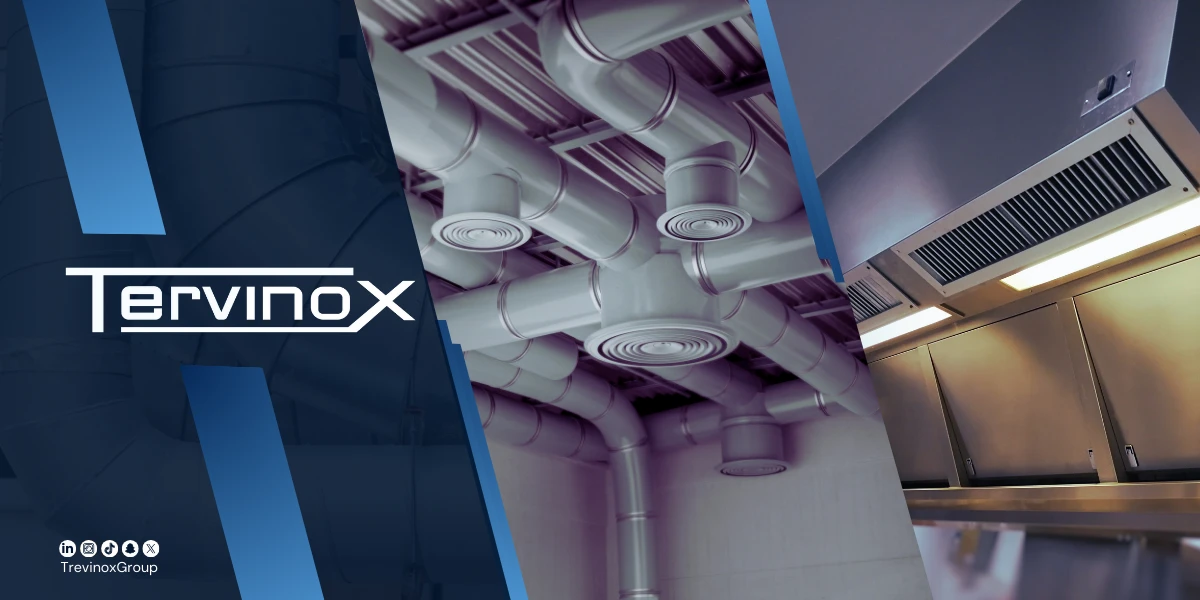
Behind scenes of every perfect meal in famous restaurant lie hidden details determining visitor experience quality and longer stay duration; air customer breathes is no less important than taste they savor. Air purification and ventilation systems in large restaurants are no longer luxury or legal requirement but smart investment ensuring disposal of annoying cooking odors and stuck oils before reaching dining hall. At Tervinox, we realize balance between suction strength and quiet operation is difficult equation, therefore providing integrated engineering solutions combining high efficiency and low energy consumption, giving your kitchen new breath and healthy sustainable work environment.
Contact Tervinox experts now to design ventilation system giving your restaurant clean environment and exceptional experience
Air Purification and Ventilation Systems in Large Restaurants
Air purification and ventilation systems in large restaurants represent backbone of any large food project success, not just about disposing smoke but extending to controlling air quality breathed by guests and work team. Efficiency here relies on system ability to suck contaminants and treat them before external discharge, preventing grease accumulation on walls and luxury decorations.
Your investment in advanced air suction technologies protects your construction investment and reduces periodic maintenance bills from surface wear due to humidity and oils. At Tervinox, we provide hybrid systems purifying air from odors and fine particles, ensuring restaurant compliance with strict environmental standards and creating comfortable atmosphere encouraging visitors repeat visits.
How Kitchen Environment Affects Employee Productivity
Work team efficiency inside kitchen directly links to surrounding climate quality; high heat and suffocating humidity lead to fast fatigue and focus distraction. When cooled organized air-conditioned environment available, occupational error rates decrease and order completion speed increases. Benefits returned to employees from ventilation improvement can be summarized in following points:
- Reducing stress levels from device noise and stove heat
- Limiting respiratory diseases from inhaling frying and combustion vapors
- Improving kitchen visibility by sucking dense vapors immediately upon rising
- Maintaining employee energy through providing oxygen-rich renewed air
- Creating job satisfaction feeling from working in professional environment caring for their health
Learn more: Extending Industrial Kitchen Equipment Lifespan
Basics of Central Kitchen Ventilation System Design
Designing air purification and ventilation systems in large restaurants requires precise engineering study starting with calculating "heat load" emitted from cooking equipment and determining required makeup air quantity. Air outlets must be distributed preventing cross currents possibly transferring odors to dining hall.
Our company relies in design on pressure balancing equations ensuring kitchen pressure always negative compared to hall, guaranteeing no odor leakage no matter cooking strength. Smart design also includes short duct paths with minimal bends reducing pressure loss, ensuring fans operate at maximum suction capacity with lowest possible electricity consumption, positively reflecting on restaurant operating budget.
Exhaust Fan Selection Criteria for Large Restaurants
Selecting right fan is entire ventilation system beating heart, not just depending on motor strength but fan type and heavy operation tolerance. Large restaurants require "Centrifugal" fans with external motors ensuring no grease accumulation on motor causing damage. Following table clarifies differentiation criteria between fan types used:
Criterion | Centrifugal Fan | Axial Flow Fan |
|---|---|---|
Static Pressure Strength | Very high tolerating long ducts | Low suitable for short distances |
Noise Level | Relatively quiet when properly installed | High due to blade rotation speed |
Grease Resistance | Designed separating motor from air path | Motor often in air path (dangerous) |
Maintenance Ease | Requires specialized periodic inspection | Easy maintenance but wears quickly |
Kitchen Hood (Hood) Specifications Compliant with International Standards
Hood is first defense line in air purification and ventilation systems in large restaurants, must be manufactured with specifications preventing oil dripping back on food. International standards require grease traps (Baffle Filters) made from non-flammable materials, and hood must be wider than cooking equipment by at least 15 cm each side ensuring complete vapor containment.
Prefer equipping hood with internal heat and humidity protected lighting, with oil collection tank provided with easy cleaning drain opening. Attention to these technical details reduces fire risks by up to 70%, preventing flammable material accumulation in remote chimney corners.
Learn about: Smart Kitchen Planning
Best Stainless Steel Types Used in Restaurant Chimney Manufacturing
True ventilation system quality appears in metal type used in manufacturing, as chimneys exposed to harsh heat, salts, and cooking acids conditions. Gauge 304 stainless steel is optimal worldwide choice for this task, for following reasons:
- Very high rust and chemical corrosion resistance
- Easy cleaning and sterilization, no pores in metal allowing bacteria growth
- Tolerating high temperatures without structural deformations
- Shiny aesthetic appearance suggesting cleanliness and professionalism to health inspectors
- Long expected lifespan reaching decades without replacement need
Why Investors Prefer Tervinox Ventilation System Solutions?
Investors and entrepreneurs preference for Tervinox solutions in implementing air purification and ventilation systems in large restaurants returns to our ability turning complex engineering challenges into sustainable cost-saving operational systems. We don't stop at equipment installation but provide precise air path analytical studies ensuring no odor interference between kitchen and dining hall, focusing on reducing electricity waste through smart control technologies.
Investors trust our expertise because we commit to using finest raw materials withstanding continuous work pressure, reducing long-term maintenance expenses and protecting restaurant assets from grease wear. Choosing Tervinox means gaining partner understanding numbers language and investment return importance, providing work environment elevating chefs' efficiency and attracting customers thanks to air purity and complete quiet during operation.
Ultimately, owning air purification and ventilation systems in large restaurants is not just technical procedure but commitment to service quality, individual safety, and project sustainability. Solutions we provide at Tervinox aim to make kitchen inspiring place for chefs and dining hall comfortable haven for customers, away from any annoyance from smoke or odors. We combine precise engineering and excellent raw materials to provide you system living long operating quietly efficiently. Don't leave your restaurant success to chance or traditional solutions possibly costing you much in future due to maintenance or building code violations.
Contact us now at Tervinox for engineering consultation and site survey, to design ventilation system placing your restaurant ahead of competition.
Frequently Asked Questions
Does ventilation system affect dining hall air conditioning consumption?
Yes, if makeup air system not precisely designed, suction system will pull cold air from hall stressing air conditioners and raising bill; therefore we balance air ensuring cooling efficiency.
What is difference between wire filters and baffle filters (Baffle Filters)?
Wire filters accumulate grease and clog quickly posing fire danger, while baffle filters change air direction dropping grease into special channel, more safe and efficient for large restaurants.
How do I know my restaurant suction strength is weak needing maintenance?
If noticing water vapor accumulation on windows, smelling cooking odors in reception hall, or finding sticky layer on tables, this means system not operating at required efficiency needing immediate inspection.
Is there need for automatic fire extinguishing system inside hood?
Certainly, world code mandates installing chemical fire suppression systems inside hood and air ducts, automatically activating upon detecting unnatural heat protecting entire facility.
How often should air ducts (Duct) be cleaned in crowded restaurants?
For large restaurants operating long hours, cleaning ducts every 3 to 6 months by specialized companies recommended preventing flammable grease accumulation and ensuring smooth airflow.



