
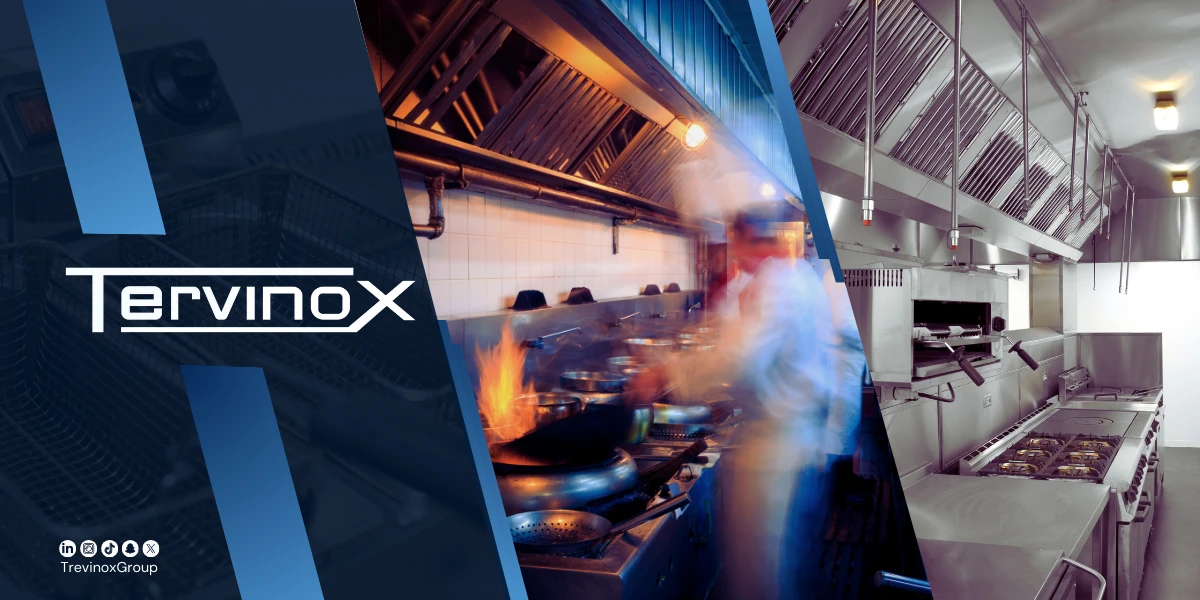
Managing a restaurant or hotel is not only about the chef’s skills. It starts with an infrastructure that guarantees food safety and operational speed. When we talk about global standards, the four rules known as the 4C’s of a successful professional kitchen stand out as a core foundation for any culinary project seeking long term sustainability.
Applying these rules, which include cleaning, correct cooking, proper chilling, and preventing cross contamination, requires intelligently engineered equipment designed to serve these goals with precision. This is exactly what Tervinox delivers through the manufacturing of stainless steel equipment and integrated kitchen solutions that help your team comply with the highest standards of quality and hygiene every day, increasing operational efficiency and reducing waste.
Do you want your kitchen to meet international health standards and serve your business for years to come?
Contact us today to start planning and executing your dream kitchen using the highest quality stainless steel materials.
Applying the 4C’s of a Successful Professional Kitchen
When discussing restaurant or hotel management, true quality is not measured only by taste, but by the safety procedures happening behind the scenes. Applying the 4C’s of a successful professional kitchen is what separates a chaotic kitchen from one that complies with international standards such as HACCP.
At Tervinox, we do not simply sell equipment. We deliver engineering solutions that make applying these rules automatic and effortless for your team every single day.
First: Cleaning
The Infrastructure of Hygiene
Cleaning is not just about wiping surfaces. It starts with selecting the right equipment materials. One of the biggest challenges in commercial kitchens is bacteria accumulation in corners and poor welds. Successful cleaning depends on equipment engineered for easy sanitation and resistance to grease and dirt buildup.
Tervinox equipment supports this standard through:
Stainless Steel 304
We use food grade stainless steel that is non porous, prevents bacterial penetration, and withstands chemical cleaning agents without rusting.
Rounded Corner Design
We avoid sharp angles in sinks and worktables to prevent food residue from accumulating in hard to reach areas.
Standardized Floor Clearance
Adjustable leg heights allow easy cleaning under equipment, preventing dirt and pest buildup beneath units.
Second: Cooking
Production Line Efficiency
The second rule focuses on cooking food at the correct temperatures to eliminate bacteria. From a kitchen setup perspective, this is about designing an efficient cooking line. A successful kitchen requires smooth workflow that prevents staff collisions and ensures fast transfer from preparation to heat.
Our cooking area designs focus on:
- Positioning prep tables close to cooking equipment to reduce movement time.
- Using stainless steel surfaces that withstand high heat from ovens and grills without warping or damage.
- Integrating proper ventilation spaces to maintain a comfortable working environment that helps chefs focus on precise temperature control.
Learn more: The 7 essential kitchen equipment items for restaurant beginners.
Third: Chilling
Smart Inventory Management
Proper chilling is the first line of defense against food spoilage. Many restaurants struggle not because of refrigeration units themselves, but due to improper food storage inside them. Random stacking blocks cold air circulation, raising product temperatures into the danger zone.
To solve this, Tervinox provides smart storage solutions including heavy duty shelving units designed specifically for cold and freezer rooms. These units resist humidity and corrosion while ensuring ideal cold air circulation around products, keeping food safe for longer periods.
Fourth: Preventing Cross Contamination
One of the greatest risks in any kitchen is the transfer of bacteria from raw meat to vegetables or ready to eat food. Applying the 4C’s of a successful professional kitchen requires precise physical and spatial separation within the kitchen, which we carefully consider when designing your kitchen layout.
Work Area Zoning
We divide kitchens into clean and dirty zones to prevent path overlap. Dedicated preparation tables are assigned for meat, poultry, and seafood, fully separated from salad and dessert preparation areas. This engineering separation makes accidental cross contamination nearly impossible, even during peak hours.
Dedicated Sinks and Wash Stations
A key tool in preventing contamination is assigning sinks for specific purposes. Our designs include strategically placed hand wash stations to enforce continuous sanitation. We also fully separate vegetable washing sinks from meat cleaning sinks, and provide sterilization units for knives and cutting boards to ensure a 100 percent safe and hygienic work environment.
How to Choose the Right Stainless Steel Equipment for Your Kitchen
Choosing equipment is not about buying shiny tables. It is a direct investment in applying the 4C’s of a successful professional kitchen, especially cleaning and contamination prevention. When evaluating equipment, focus on technical specifications rather than appearance. Low cost equipment is often made from materials that react with acids or rust quickly, exposing your project to health violations and high replacement costs.
Before purchasing, review these criteria carefully:
Alloy Grade
Ensure all food contact surfaces are made from Stainless Steel 304 (AISI 304). It is the only grade resistant to rust and corrosion caused by acids and strong detergents, unlike commercial grade 201 which corrodes over time.
Metal Thickness (Gauge)
Choose equipment with higher thickness, ideally 1.5 mm or more for worktops, to withstand heavy use without dents that later become bacterial hotspots.
Welding and Finishing Quality
Inspect joints and corners. Welds must be smooth and fully polished using TIG welding so they form a seamless surface that prevents food buildup and makes daily sanitation faster and more effective.
Functional Design
Look for equipment that offers flexibility such as adjustable shelves and legs with adjustable bullets to level units on uneven floors.
Saudi Arabia is witnessing rapid growth in the hospitality sector in line with major tourism development. This raises expectations and standards for central kitchens and hotel facilities. Choosing the best kitchen equipment supplier in the Kingdom means partnering with a manufacturer that understands demanding operations and complies with international standards such as SASO and HACCP.
Many investors in Saudi Arabia now prefer manufacturers with deep engineering expertise and custom fabrication capabilities rather than relying solely on imported ready made equipment that may not fit their space.
Learn more: How to choose the right café equipment for your first project.
Why Tervinox Is a Strategic Partner in Saudi Arabia
Space Based Custom Solutions
We do not offer only standard products. We design and manufacture stainless steel units including tables, sinks, storage units, and ventilation hoods based on precise site measurements, ensuring every centimeter is used to increase productivity.
Durability for Harsh Conditions
We understand the high thermal and operational pressure kitchens face in the region. Our certified materials and reinforced designs withstand continuous use without loss of efficiency.
Reliable Export and Technical Support
We provide secure shipping and precise installation to ensure your equipment arrives and operates in Saudi Arabia with the same factory quality, backed by a real warranty for complete peace of mind.
Frequently Asked Questions
What is the expected lifespan of Tervinox stainless steel equipment?
With proper maintenance and correct cleaning, our Stainless Steel 304 equipment lasts more than 15 to 20 years at full efficiency without corrosion.
Do you manufacture custom sized ventilation hoods?
Yes, we design and manufacture custom ventilation and extraction systems sized specifically for your cooking line to ensure maximum removal of fumes and grease.
What is the difference between custom fabrication and ready made equipment?
Ready made equipment comes in fixed sizes that may waste valuable kitchen space, while our custom made solutions are designed to fit gaps precisely and match your workflow.
Do you provide 2D and 3D engineering drawings before execution?
Absolutely. Manufacturing begins only after site measurement and approval of detailed engineering drawings showing equipment layout and movement paths.
How can I maintain minor scratches on stainless steel surfaces?
For surface scratches, use very fine sandpaper or a Scotch Brite pad following the metal grain direction, then apply specialized polishing oil to restore the surface to a like new finish.



